By: Gen. Jim – 9/8/26
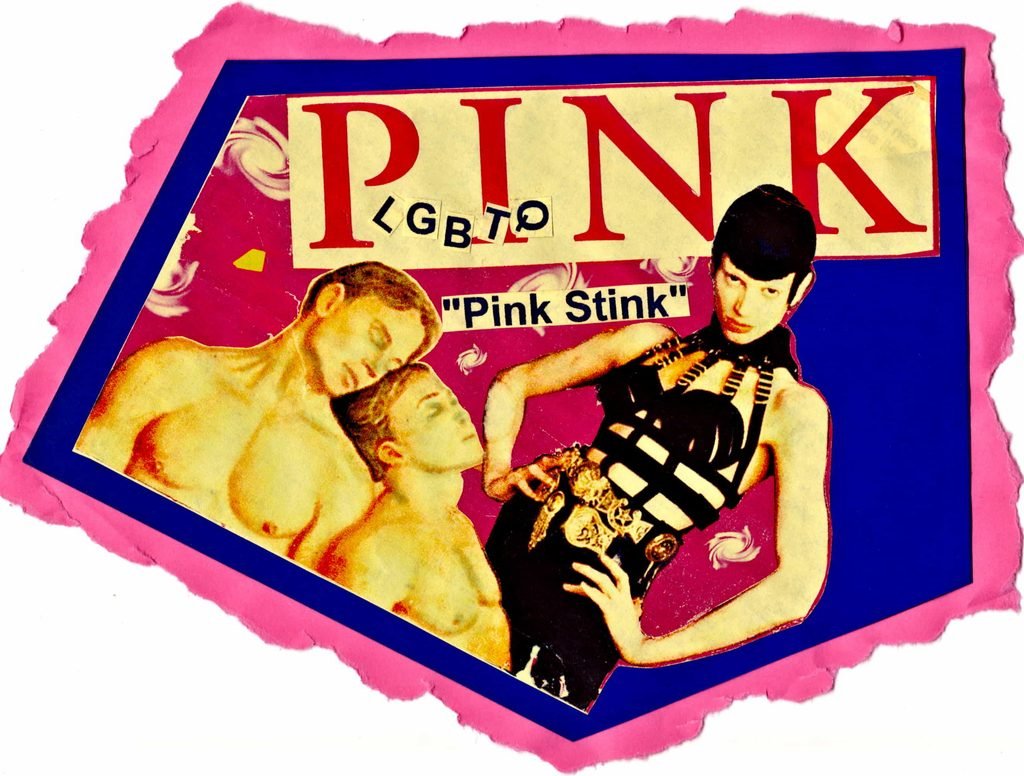
The end of WW2 saw the appearance of several short-lived groups & publications. Some 9 issues of “vice versa” were published in 1947-48 in Los Angeles. Edited by lesbians, it aimed to reach the lesbian community, & though it soon disappeared, many of the people associated with it were later instrumental in the publication of “One”, a homosexual rag, & the “Ladder”, a lesbian publication. The nucleus of most LA orgs., & therefore of the early national groups, was a nebulous group organized in 1948 to support the candidacy of Henry Wallace & called “American Bachelors for Wallace”. The most successful group to come forth was the “Mattachine Foundation” (later “Society”). The big guy was Harry Hay, a man with Communist ties. In 1950 a handful of “Gay” men with “Communist” ties began to meet at the home of Harry Hay in the Silver Lake neighborhood of LA.
The idea for the “Mattachine Society” (MS) occurred in 1948 as already stated. Ed Sagarin in his study of organized homo movements compared the early “Mattachine Foundation” to Alcoholics Anonymous.
The leadership of the Mattachine Foundation organized a citizen’s committee to outlaw entrapment. Dale Jennings, a homo in LA, was falsely accused by the police of solicitation. In court, Jennings publicly admitted he was gay but indicated he was not guilty of solicitation. Hence the group became more secret. In short, with all the publicity, the incipient “gay” organizations began to expand, but also more anti-homo groups were formed. The secrecy deemed so important by the Mattachine Foundation (MF) founders had become a liability. Of course, there was the mainstream Church that opposed homosexuality, being backed by Scriptures found in the Bible, e.g. Lev. 18:22; Romans 1:24-32; 1 Cor. 6:9; 1 Tim. 1:10.
After several years Hay found men who shared his vision, one being his “lover” Rudi Gernreich, an Austrian-Jewish costume designer (later achieved fame in the 1960s as the creator of the topless swimsuit). Soon others followed (who were fellow Communist Party members). Men like Dule Jennings, (writer), Bob Hull & Chuck Rowland – they called themselves the “Mattachine Society”, after an all-male performance troupe in Medieval Europe.
Persecution
As the group grew, so did persecutions. Inevitably the organization was compared by some persecutors to the secret cells which Sen. Joseph McCarthy was charging existed in the Communist Party. In time 96 “perverts” were dismissed by the State Dept., & by 1956 the LA Herald & Express, a Hearst newspaper, could caption a story “State Dept. Fires 531 Perverts, Security Risks.” (July 2, 1953, see also “One”, 1:4 (April 1953), 6 & 1:7 (July 1953), 25).
If one looks up “The 45 Goals of Communism Today,” you’ll discover this:
Goal #25 = “Break down cultural standards of morality by promoting porn & obscenity in books, magazines, motion pictures, radio & TV.
Keep in mind these goals were placed in the Congressional Record by A.S. Herlong Jr., (D-Florida), & since that time, they have been shared world-wide;
Goal #26 = “Present homosexuality, degeneracy & promiscuity as ‘normal, natural, & healthy’.”
We see these TWO DEMONS in full satanic play in this nation as I write this article: homosexuality (all LGBTQ) & communism. The “Left” & “Far Left” has a well-trained subversive army being used as a cultural/political weapon. These homos/commies are vicious & irresponsible!
Back in the day Gen. McCarthy called all this left-wing “com-symp” causes. Paranoia ran deep back then as it does today. Subversion has come “out!”, it is here & it is queer! (as many complain).
TO WRECK & WEAKEN
While your average Church-ite doesn’t have a clue as to what I’m saying – been saying for nearly 50 Plus years! – the WAR for the SOUL of America is here. Put down your Church toys & join the ranks of the “Army That Sheds No Blood” – the Army of God in full battle gear. The goal of Communists/LGBTQ community is to cause as much HELL as possible so as to frighten/weaken the nation.
Hey, this is not the time to flee in fear of the “Commie queer” – it is time to stand up right for the “good fight” (see 1 Tim. 1:18; 6:12; 2 Tim. 2:3; Jude 3).
It is time, PAST TIME!!! to get off your lazy behinds & get to the “Front Lines’ – there’s a WAR ON!!!
The ONE vs. The One
“One, Inc.” was organized in 1952 and incorporated in 1953 (I was 8 years old then). Some original members of the MF/MS went over to One. Even out of these came another group called the “Homosexual Info. Center” All these groups were male-oriented mostly (the MF did include lesbians in small number); One Magazine had a lesbian editor (1954-57). The first organization of lesbians was the “Daughters of Bilitis”, organized in 1955 and so named from a poem by Piene Louys entitled “Songs of Bilitis”. (One, Inc., had chosen its name from a quote from Thomas Canlyle: “A mystic band of brotherhood makes all men one.” (One. 3:2 (Feb. 1955), page 9)
We who are on the opposing side of all this vanity & insanity of queer humanity are on the side of The ONE, Jesus Christ the Lord! We are of the John 17:11 corps: “… Holy Father, keep through Your name those who You have given Me, that they may be ONE as We are.”
John 17:21 has ONE mentioned twice; vs. 22, twice also; vs. 23 ONE mentioned as well.
Birth of DOB
DOB, as the “Daughters of Bilitis was often abbreviated, was founded by Phyllis Lyon, Dell Martin, & 6 other lesbians. Soon, it split over aims & organization. The surviving members of DOB began publishing the “Ladder, & out of it came much of the leadership of today’s lesbian movement (70s/80s). Ladder published feminist articles. With the publication of One Magazine, the Ladder, & after 1955 the Mattachine Review, the homo movement had gone public, & gay organizations began to proliferate – and so, here we are today, America full of perversions, both LGBTQ & heterosexual.
Gone Public
With the publication of “One” rag, the “Ladder”, & after 1955 the “Mattachine Review”, the homo movement had GONE PUBLIC!, hence, the “gay” organizations began to proliferate. Now the “gays” have a whole month dedicated to their abominations: “Pride Month” (June). But McCarthyism never died. We may not agree with “M”, but it was a warning of what was to come – Gay/Communism becoming a great destructive force.
The Kinsey reports emphasized that homosexuality was far more widespread than most had ever suspected. Kinsey emphasized that homosexuality was not confined to those who lived with the same sex but also involved married couples, heterosexuals.
Changing Attitudes
Ed Sayarin (aka Donald W. Cary), wrote in his book The Homosexual in America, the following: “One great gap separates the homo minority from all others, & that is its lack of respectability in the eyes of the public, & even in the most advanced circles.” Pray tell me WHY we should “respect” those who DO SEX the “unnatural way” as Roman 1:26, 27 reports. Sagarin continues: “It has become a sign of worthiness to take up the cudgels for almost any minority group, except the homosexuals. One is a “hero” if he espouses the cause of the minorities but is only a suspect if that minority is a homosexual group.” (1951, p. 14). Boo Hoo! Will these LGBTQ folks STOP crying about not being “respected”? What more do they want since America has given a whole month to their abominations! What they really want – LUST FOR! – is worship! Yep! They want the straight community to worship their Pink Perversions!!!
Harrison Hill
Hill wrote an article “It Mattered That He Showed Up: On Pete Buttigieg’s ‘Shortest Way Home’” (May 28, 2019, published in the LA Review of Books). As you well know by now Hill has written “The Oracle’s Daughter” (ref. to my wife = “Oracle” & daughter, Sarah Green; See our PX3-6 Files). His book was published/released April 7, 2026.
We suspected that Hill was a homosexual from the get-go but had no proof – now we have proof (see my article, “Let’s Talk About Gay Sex”). In this article Hill writes about Pete Buttigieg running for U.S. Prez. (pg. 2 of his 8 page article). As if Pink Stink B. Obama wasn’t BAD enough – homo/bisexual – Hill wants another “gay” to occupy the White House, aka Pink House!
This effeminate politician, writes Hill, “of course, Buttigieg remains a long shot. But for now I choose to linger in the possibility, in the hope, that he & HIS HUSBAND (my emph.) – his husband – might yet go to the White House. That they, & we, might yet win.” (p. 8), ad nauseam!
Let’s get this straight: If PB, the “wife”, becomes the U.S. Prez, that would mean that his “husband” would be the “first husband”???
Speaking of Politics
See the following writings by Vern L. Bullough
101. Was Bill Clinton the first presidential candidate to openly support gay and lesbian rights?
Gay and lesbian voters in the 1992 presidential election were energized by Arkansas governor Bill Clinton’s campaign promises on a wide range of community issues, from AIDS to lesbians and gays in the military. Gays and lesbians provided Clinton’s election campaign with crucial dollars, volunteers, and votes, helping provide the margin of victory in states such as Georgia and Ohio. But the gay and lesbian community has played an active role in many previous presidential campaigns, sometimes with significant support from the candidates.
In fact, the most important gay rights organization of the 1950s, the Mattachine Society, was originally conceived as a way for gay men to support a president Henry Wallace. Gay rights pioneer Harry Hay attempted to organize among gay men he knew in Los Angeles, and some of them suggested he call their group Fruits for Wallace or Queers for Wallace. Hay instead proposed Bachelors for Wallace, but the group never really advanced past the idea stage.
Perhaps because of McCarthyism, perhaps because of the lack of an appealing candidate, gays and lesbians as a group largely stayed out of the presidential elections of the 1950s and 1960s. But in 1972 the Democrats nominated a candidate who had publicly supported gay rights as early as 1970: George McGovern. Many gays and lesbians had worked hard for McGovern during the primaries.
In 1980, Carter again refused to support a gay rights plank in the Democratic platform, and much of the gay and lesbian activist vote in the primaries went to Sen. Edward Kennedy. Of course, in the general election Ronald Reagan was the other choice, so most voters for whom gay rights was a main issue held their noses and voted for the defeat-bound incumbent.
Early in his campaign for the 1984 Democratic presidential nomination, former vice president Walter Mondale took the risky step of addressing over 1,000 gay activists at ta human rights dinner at the Waldorf-Astoria in New York City. Mondale was received enthusiastically despite the fact that he never mentioned gay rights in his speech. A 100,000-strong gay rights march outside the Democratic National Convention that year helped ensure the passage of several gay rights planks, including one relating to AIDS research, in the Democratic platform.
Neither Gov. Michael Dukakis nor Vice President George Bush aroused much enthusiasm among gays and lesbians in the 1988 elections. In fact, the only candidate who elicited strong support within the organized gay and lesbian community was the Rev. Jesse Jackson, whose moving speech at the 1987 march on Washington and consistent inclusion of gays and lesbians in his Rainbow Coalition convinced many liberal gay Democrats that he was their best candidate in years.
Review / More Background
What was the first gay rights organization in America?
Almost 30 years before Harry Hay and his friends founded the Mattachine Society, a nonprofit corporation called the Society for Human Rights paid $10 for a charter from the state of Illinois and took its place as the earliest documented gay rights organization in the United States. The written purpose of the Chicago-based group was so vague that the government clerk who processed the application for a charter undoubtedly had no idea he was helping to make queer history.
The guiding light behind the society was Henry Gerber (1892-1972), whose family had emigrated from Bavaria to Chicago in 1913. Immediately after World War 1, Gerber served with the U.S. Army’s occupation forces in Germany and there became acquainted with the work of gay rights pioneers, including Magnus Hirschfeld and his Scientific Humanitarian Committee. Gerber was particularly enthusiastic about a group called Bund für Menschenrecht (Society for Human Rights), which advocated for a mass movement of gay people. He began subscribing to German homophile magazines and making frequent trips to Berlin to participate in the city’s lively gay culture.
Gerber’s experiences in Germany fueled his desire to launch a similar movement in the United States, to strive for what he called “homosexual emancipation.” Soon after he returned to Chicago, where a gay subculture was forming, Gerber set out to achieve his goal.
Gerber’s greatest challenge as a gay activist came in the summer of 1925. Although most members of the society were, like Gerber, bachelors, the vice president of the organization, Al Meininger, had a wife and children. When Meininerg’s wife found out about his double life, she reported him to a social worker, alleging he and his friends performed “strange doings” in front of the children. An article appeared on the front page of the Chicago Examiner under the lurid headline STRANGE SEX CULT EXPOSED. The three officers of the society – Gerber, Meininger, and an itinerant preacher named John Graves – were arrested and prosecuted. The policemen who raided Gerber’s apartment at 2 A.M. took his typewriter, personal diaries, and all the files of the society. But because the arrests were made without a warrant, a judge eventually dismissed the case, and the three men were released.
Though Gerber got his typewriter and the society’s papers back, his diaries were never returned. They were confiscated by postal inspectors who were investigating if “Friendship and Freedom” had violated the Comstock Acts, the federal law against sending obscene material through the mail. Gerber subsequently lost his post-office job, and his ordeal marked the end of his fledgling gay rights group. Disheartened, he moved to New York City and reenlisted in the Army, serving for another 17 years.
HOMOSEXUALITY
A History
Sociologists have developed the concept of deviance to describe behavior that violates social expectations or breaks social norms. In this sense homosexuality may be described as deviant behavior, although in general we have avoided the use of the term in this book because in our society deviance itself is stigmatizing. That is, to call someone a deviant is the same as calling someone a bad name.
One of the early theoreticians of deviance was Emile Durkheim, who observed that behavior that qualifies one person for sainthood may condemn another to prison, a mental asylum, or the stake. Durkheim urged sociologists to “abandon the still too wide-spread habit of judging an institution, a practice or moral standing as if it were good or bad in and by itself, for all social types indiscriminately.”
This is because deviance is defined by social norms. Killing an enemy is normal and right if the attacker is wearing a soldier’s uniform and fighting for his country, but killing a personal enemy is murder. Deviance not only varies with conditions and time but from group to group, and the definition of what constitutes deviant behavior is constantly changing. In our society today this is happening to homosexuality. Any period of transition like the present one is traumatic both for the individuals or group involved and for society at large.
People who have been stigmatized as deviant all of their lives do not immediately get over it even though society become more tolerant. Nor is all society willing at once to abandon past attitudes, especially when they are embedded as deeply as those toward homosexuality are.
For the past fifty years homosexuality has been generally regarded as a sickness. In 1974, however, the American Psychiatric Association voted to remove homosexuality from its catalogue of mental illnesses, declaring it to be instead a “sexual orientation disturbance.” Can the vote of a majority of psychiatrists suddenly remove homosexuality from the category of illness? Is not such an action just like declaring that pneumonia is no longer an illness?
The change is clearly the result of political pressure on the medical community, from both within and without. Not all psychiatrists have accepted the vote of their association, and as of this writing, there is still some agitation to change it. Irving Bieber might be considered typical of those psychiatrist who are opposed to the change. He has written:
We consider homosexuality to be a pathological, bio-social, psycho-sexual adaption consequent to pervasive fears surrounding the expression of heterosexual impulses.
All psychoanalytic theories assume that adult homosexuality is psycho-pathologic.
It might well be that many psychiatrists have a vested interest in defining homosexuality as pathological, because once it is so defined, there is always the possibility of a cure, and that its cure should be under the control of the psychiatrist. The same is true for psychologists, who as a group preceded the psychiatrists in redefining homosexuality as not pathological. Still, anyone who examines the literature about homosexuality over the past fifty or sixty years is impressed with the great attention paid to the etiology of the “diseases.” How valid were these studies? Probably the unbiased observer would have to agree with Martin S. Weinberg and Colin J. Williams, who argued that the studies were methodologically poor and in general did not “measure up to minimal canons of scientific research.”
It was, however, psychiatrists and psychologists who made it possible for other disciplines to begin to do research.
Freud came to believe that homosexuality was not pathological, and in 1935 e wrote to a mother of a homosexual:
Homosexuality is assuredly no advantage, but it is nothing to be classified as an illness; we consider it to be a variation of the sexual development. Many respectable individuals of ancient and modern times have been homosexuals…. By asking me if I can help, you mean, I suppose, if I can abolish homosexuality and make normal heterosexuality take its place. The answer is, in a general way, we cannot promise to achieve it. In a certain number of cases we succeed in developing the blighted germs of heterosexual tendencies which are present in every homosexual; in the majority of cases it is no more possible…
Unfortunately the contents of the letter were not made public until 1951. There were a number of other studies gathering anthropological, historical, literary, and other data to indicate that homosexuality was not pathological, but their impact on the medical community was limited, and many of them were dismissed as special pleaders who were themselves homosexual. At the same time there were a number of quantitative studies, many of them by Americans, emphasizing the different nature of human sexuality. The most influential of these studies, and the one that seemingly marked a turning point in attitudes toward sexuality in general and homosexuality in particular, was that by Alfred Kinsey and his associates, whose work has been reported on elsewhere in this book.
Though Kinsey was a zoologist, his work followed a social-science model rather than a biological or medical one, and these studies mark the emergence of the social scientists into the study of homosexuality. The result has been to view homosexuality as not pathological but a variant of sexual expression. There are many types of homosexuals, some with fewer psychological problems than others; most psychological problems are not different from those of heterosexuals. This was the conclusion of Evelyn Hooker in her pioneering study of male homosexuals mentioned elsewhere in this book. She stated, “Homosexuality may be a deviation in sexual pattern which is within the normal range, psychologically.” There are not only psychological factors involved but societal factors as well Martin Hoffman, a psychiatrist, wrote:
We are now beginning to realize that social forces have an influence on all kinds of phenomena which we have hitherto analyzed in individual terms. We are beginning to understand, for example, that even physical illness such as heart disease and cancer may be influenced by sociological factors…. If this be the case, as is plainly indicated by recent studies, then it ought to be clear that the relationship of the homosexual to a largely hostile society must have profound effects on his life.
Once homosexuality is considered a variant of sexual expression, there is no necessity to search for cures, and the possibility appears of studying homosexuality as just one aspect of human sexual behavior.
One of the pioneering studies in examining homosexuality in these terms was by Martin Weinberg and Colin J. Williams, who examined homosexuality in the United States (particularly New York City and San Francisco), in the Netherlands, and in Denmark. Though all areas shared a common historical attachment to the western tradition, they found that homosexuals had different ways of adapting to their problems. Homosexuals in the United States, for example, tended to rely more on the homosexual subculture and/or militant action, while homosexuals in Europe tended to be more politicized and less segregated. Not so surprisingly, they found that most homosexuals preferred not to be identified as such and passed in the everyday world as heterosexual. Many of the psychological problems of homosexuals were associated more with worrying about exposure and anticipating sanctions than with homosexuality itself. Since the homosexual has been acculturated to present himself as heterosexual, most have learned to do so without really thinking much about it.
Perhaps the most radical difference from the general run of heterosexual population was that nearly half of the white homosexual males and one-third of the black homosexual males said that they had had at least 500 different sexual partners in the year before the interview. Most of the women had fewer than ten female sexual partners, and more than three-fourths were involved in relatively stable relationships. Just how much more promiscuous the male homosexuals are than similar groups of swinging single males is uncertain, nor is it clear how much this behavior is dictated by the group norms of the homosexual community. The majority of homosexual men said that they had never had sex with a male prostitute, indicating that changing partners was common. Other studies of homosexuality have indicated that about the same percentage of male homosexuals suffer from impotence (with male partners) as male heterosexuals do with female partners, and “frigidity” is as common among female homosexuals as among other females.
Masters and Johnson, in their 1979 study of homosexuals, for example, found that about 3 percent of their sample failed to reach orgasm, the same percentage as for heterosexual couples. However, Masters and Johnson did find some differences with heterosexuals; one of the more significant was that homosexual couples had a more relaxed understanding of their partner’s sexual needs than most heterosexual couples, perhaps because it is easier to understand one’s own sex than the opposite sex. They also found that heterosexual sex fantasies are common among homosexuals, mirroring the homosexual fantasies occasionally reported by heterosexuals.
Masters and Johnson also reported that 67 of the homosexuals they had treated (separate and distinct from the 176 homosexuals on whom they based their data) had consulted them in order to convert or revert to heterosexuality. In spite of the clear desire expressed by the individuals, however, Master and Johnson reported a failure rate of 35 percent and predicted it would go higher as they continue long-term follow-up studies. (Vern L. Bullough, 1979).